
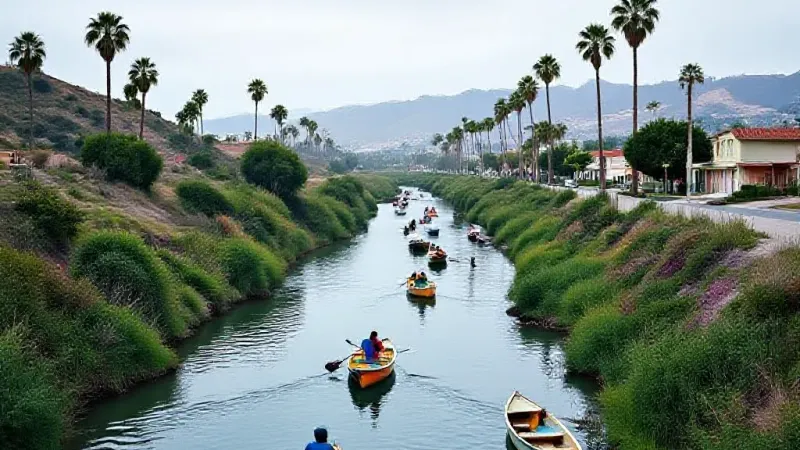
After decades of raw sewage pollution in the Tijuana River, leading to years of beach closures, San Diego County Supervisors voted Tuesday to advance a local plan to divert and treat the river water. The board approved $1.8 million to design a system intended to capture and clean contaminated water before it reaches San Diego communities.
Board Chair Terra Lawson-Remer emphasized the necessity, stating that the county needs to "capture all of this waste, all this pollution, and we need to treat it before it gets into our rivers, before it gets near our schools, before it gets to our beaches.” The vote for the design plan was four to one, with Supervisor Joel Anderson opposing unless cities in the affected area contributed to the project.
In immediate action, the board also unanimously approved $4 million to address a significant sewage hot spot on Saturn Boulevard. This area is known for aerosolized river pollution, confirming long-suffering residents' complaints, as scientists have found high levels of air pollution there.
Long-term funding is tied to a proposed half-cent county sales tax, dubbed the “Protect San Diego County Health and Safety Act,” which will go before voters in November. If approved, this tax could generate $360 million annually, with approximately $80 million earmarked each year for Tijuana River improvements. Lawson-Remer stated this annual revenue could fund between $700 million and $1 billion in bonds required to construct new sewage treatment facilities.
The ongoing sewage flow impacts communities like Imperial Beach and Coronado, causing illness, forcing beach closures, and even disrupting Navy SEALs training. The river, ranked No. 2 on American Rivers' list of most endangered rivers, also carries industrial chemicals, pesticides, pharmaceuticals, and emits airborne toxins like hydrogen sulfide gas, which causes asthma and headaches.
While existing U.S. and Mexico wastewater treatment plants have seen recent upgrades and federal funding of about $650 million, they have struggled, releasing hundreds of millions of gallons of raw sewage. Critically, some pollution still bypasses these plants entirely. Supervisors believe the proposed new facility could divert and treat the river as it crosses from Mexico. Supervisor Aguirre noted, “We can’t control what happens across the border, but we can control what we do on our side of it.”
San Diego State University engineering professor Natalie Mladenov explained that the treatment could involve advanced water purification techniques like ultrafiltration and reverse osmosis, or be treated to meet EPA standards for ocean discharge. Supervisors view this as an opportunity for San Diego County to achieve a permanent solution within an “aggressive timeframe,” with Aguirre adding, “We’re done waiting for someone’s else’s timeline.”