
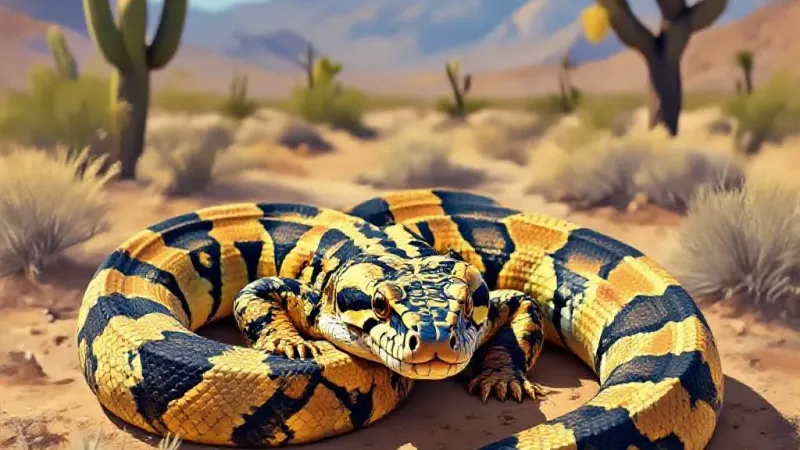
Somehow, a Gaboon viper, a snake whose natural habitat is the tropics of central and western Africa, has found its way to a residential street in Santa Ana and is currently on the loose. The sighting of the extremely venomous viper, which boasts the longest fangs of any snake in the world, prompted a public advisory from the Santa Ana Police Department earlier this week.
The alarming reptile was “last seen in a tree within a residential neighborhood near Main Street and Edinger Avenue,” according to the department’s public warning. This particular species, usually found thousands of miles away, caught local attention on Monday. The Santa Ana Police Department quickly took to social media to alert residents, asking the public to be aware of their surroundings.
The department emphasized a crucial instruction for anyone who might encounter the unwelcome visitor: “DO NOT approach or attempt to handle it.” If residents spot the snake, they are asked to provide its location by calling the department directly at 714-834-4211. The presence of such a creature in a Southern California neighborhood is certainly out of the ordinary, to say the least.
Understanding a bit about the Gaboon viper helps explain the police's urgent warning. Beyond its impressive fangs, the viper is characterized by two hornlike projections on its snout. Its diet mainly consists of rodents and ground-dwelling birds, and it's known for its method of striking its prey and holding on until it succumbs.
Despite its formidable capabilities, the vipers are considered by experts to be placid. The Smithsonian’s National Zoo & Conservation Biology Institute notes that most bites occur when the snake is stepped on before it has an opportunity to get away. However, the institute also advises that a hungry Gaboon viper will strike at almost any sideways movement. This balance of a calm demeanor with potent defense makes the current situation particularly unique.
For those interested in the natural history of this unexpected local, the Smithsonian’s National Zoo & Conservation Biology Institute also reports that female Gaboon vipers give birth to a significant number of live young, typically between 50 and 60.
For now, the Santa Ana Police Department continues to ask for the public's vigilance. Residents near Main Street and Edinger Avenue, and indeed across Santa Ana, should keep an eye out and remember that while this African visitor might seem unusual, it should be given a wide berth and reported to authorities if seen.