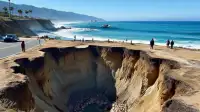
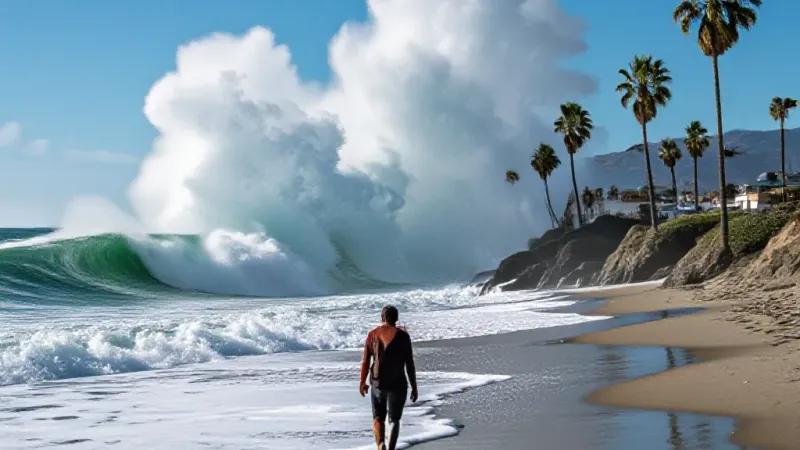
Days of intense waves, fueled by distant Hurricane Marie, brought significant destruction to the Southern California coastline this past weekend, damaging infrastructure and oceanfront properties from Malibu to San Diego. The events served as a stark preview of what a predicted “super” El Niño winter could bring to the region.
In Long Beach, the historic wooden boardwalk on the Peninsula suffered extensive damage, with several sections destroyed after massive swells overwhelmed protective sand berms and battered the seawall. Oceanfront homes also sustained damage, and some were flooded, leading to evacuation orders for at least 24 homes until Wednesday morning as the Long Beach Fire Department assessed structural integrity. One home was later yellow-tagged, indicating limited safe access, according to Long Beach fire spokesperson Capt. Jack Crabtree.
Peninsula resident Carmen Vaudry, 58, described the change, noting "The whole beach is gone," as sand that once sat below the boardwalk now appears several feet lower. Matt Taylor, another Peninsula resident, helping clear debris, called the situation "unprecedented" and expressed high concern, stating, "This is just the beginning of the season." Steve Hood, 70, who has lived in the area since the 1960s, recalled bigger waves during the 1997-98 El Niño but observed that this recent storm caused more damage because less beach remained as a buffer. Long Beach officials are working to fortify remaining sand berms and seawalls, while residents hope for a dredging project, though no updates from the city have been provided since last year.
The ocean's force was felt widely. In Dana Point, relentless waves damaged beachfront homes in the Capistrano Bay District, tearing through walls and destroying decks. City officials red-tagged seven homes, deeming them unsafe, and yellow-tagged two others for safety concerns. Farther south, high tides again shut down a vulnerable section of the coastal railway in San Clemente due to slope damage and erosion. In Malibu, a massive sinkhole formed in the driveway of Nicolas Cage’s oceanfront residence, resulting in the evacuation of 31 homes and a local emergency declaration. Waves also splashed over sections of Pacific Coast Highway near Point Mugu, and in Seal Beach, coastline parking lots flooded.
Climate scientists warn this is likely just the beginning. Daniel Swain, a University of California climate scientist, stated Tuesday, "Unfortunately this is just a preview. The coastal flooding later this year… it will get worse this fall and especially this winter." Jonathan Warrick, a research geologist with the U.S. Geological Survey, added, "We are seeing the effects of El Niño already." The National Weather Service maintained beach hazard and flooding advisories for much of Southern California's coast through at least Wednesday night, citing the ongoing "combination of high surf and high astronomical tides during the evenings."
Local agencies are racing to prepare for the predicted strong El Niño. While an El Niño year doesn't guarantee such storms, it significantly increases the odds of a rainier winter for Southern California. Elevated ocean temperatures, already noted by scientists, push tide lines higher and add energy to storms. Strong El Niño forecasts suggest these temperatures could rise even further. Long Beach officials are checking drains, Ventura County public works crews are identifying vulnerable coastal spots, and Orange County is rehabilitating pump stations. Officials in fire zones like Pacific Palisades and Altadena are preparing for potential mudflows. Most coastal communities are stockpiling sandbags.
Areas like the Long Beach Peninsula, a narrow stretch of upscale homes with beaches on both sides, are particularly vulnerable. Its low elevation and south-facing beach make it uniquely susceptible to strong southerly swells from tropical storms. Nearby Seal Beach, which saw its landmark pier collapse during the 1983 El Niño, shares many of these preconditions.