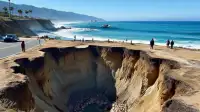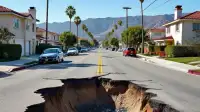

Southern California coastal cities are assessing recent storm damage and preparing for a "coastally trapped Kelvin wave" expected to elevate sea levels. This follows recent severe conditions that caused significant damage along the region's shoreline.
Last week, homes from south Orange County to Malibu experienced flooding and damage, while coastal erosion affected areas from Carlsbad to Long Beach. Laguna Beach, Dana Point, and Carlsbad each declared local states of emergency due to this erosion and sand loss. These conditions were attributed to a south swell linked to Hurricane Marie, a storm typical during an active eastern Pacific hurricane season often associated with El Niño.
Laguna Beach City Manager Dave Kiff noted that Laguna's damage was "among the greatest, or most significant" compared to other cities, all of which expressed concern about sand replenishment projects. Orange County officials activated their emergency operations center after two cities declared emergencies. Orange County Board of Supervisors Vice Chair Katrina Foley stated that the county is "mobilizing our emergency response" in light of the "serious damage" to coastal cities. Transportation officials also shared video of strong ocean waves impacting Metrolink train tracks in San Clemente, with sediment crumbling below, calling the situation "that serious." In San Diego County, Carlsbad's local emergency declaration specifically aimed to protect Carlsbad Boulevard, or Old Highway 101, from erosion.
While previously an obscure concept, Kelvin waves are central to El Niño, a climate pattern involving the heating of equatorial Pacific ocean waters that influences global weather. Michael Jacox, a research oceanographer with NOAA, explained that "coastally trapped" Kelvin waves must follow a coastal boundary. Dillon Amaya, an expert in these waves and a professor at North Carolina State University, noted that scientists can now model and track them in real-time, adding that a historically large El Niño currently underway is expected to bring some of the largest coastally trapped waves on record.
As El Niño develops, equatorial trade winds weaken, causing warm water and higher sea surface heights to move east from the western equatorial Pacific, propelled by "equatorially trapped Kelvin waves." Upon reaching South America, these waves split, with one branch heading north toward California, becoming coastally trapped. Jacox added that along the coast, these waves "elevate sea levels, increase ocean temperatures, and push cold, nutrient-rich waters deeper below the surface."
These waves can raise sea levels by 6 to 12 inches, with effects potentially lasting for months. Amaya cautioned that these elevated sea levels, when combined with storms, can significantly increase flood risk and coastal erosion. The coastally trapped Kelvin wave is currently off the west coast of Mexico. Amaya anticipated it would enter the Gulf of California around Saturday, taking about 11 days to travel its U-shaped coast. From the Baja California peninsula's tip, it would then take approximately seven days to reach San Diego, another two to three days to reach Los Angeles, and then two to three more days to get to San Francisco. This timeline places its arrival in Southern California in early October, though the exact timing is not certain.
Amaya described these waves as "pretty epic," traveling roughly 15,500 miles from the western equatorial Pacific to the Gulf of Alaska over about 120 days. This phenomenon is not a surfable wave and would not be noticeable to swimmers or boaters. However, it is expected to increase sea levels off the California coast by an additional 6 inches or more, with effects that could last for months. Jonathan Warrick, a research geologist with the U.S. Geological Survey, highlighted the danger, explaining that an extra foot or more of water "can really wreak havoc," as seen in recent damage to homes. California has already experienced about a foot of sea level rise over the past 125 years due to global warming, alongside recent abnormally high tides.