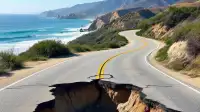
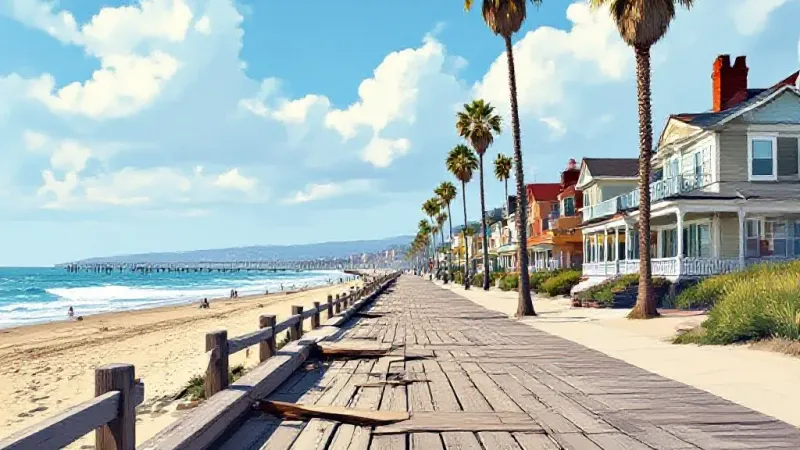
The Long Beach boardwalk, a historic stretch between 64th and 65th Place on Seaside Walk, has suffered significant damage, collapsing further after a recent period of heavy surf. This latest event adds to the considerable strain on the structure, with mud and sand inundating the Long Beach Peninsula as waves breached its protective timber bulkhead.
Following the recent storm activity, inspectors red-tagged nine buildings along Seaside Walk, indicating they are unsafe for entry. Another building received a yellow tag, which restricts its use. This comes after a trio of storms since early September, including Hurricane Marie, Hurricane Polo, and most recently, Tropical Storm Rachel.
Melanie Miller, a spokesperson for the Long Beach Fire Department, highlighted the continuous nature of the damage. "The collapse began when [Hurricane] Marie came," Miller stated, noting how the successive storms have caused accumulating issues. She added that while preparations were made, including deploying 3,000-pound sandbags, efforts were limited by low tide windows and dynamic ocean conditions.
The city’s public works team and its Parks, Recreation and Marine bureau are currently focused on securing the damaged area. This involves placing sandbags and rebuilding the berm to prevent further water intrusion, all part of an emergency response. The city is reinforcing the boardwalk with lumber and utilizing 3,000-pound sandbags to deflect wave energy from the seawall.
Long Beach Mayor Rex Richardson emphasized the gravity of the situation, stating that the city is taking it "very seriously." Richardson pointed to the damage as a stark reminder of the need for greater "climate resilience and coastal resiliency" in the region. He underscored the boardwalk's historical importance, calling it "one of the oldest boardwalks in California" where "lots of memories were made," and stressed that retaining such iconic spaces will require substantial investment to acknowledge the changing climate.
According to Laath Martin, a spokesperson for the city manager’s office, Long Beach developed a "seven-point plan" shortly after Hurricane Marie to address repairs, replenish beach sand, create additional layers of protection, and secure long-term solutions and funding. While some of this work is already underway, other components are slated for the coming days, weeks, and months.
Among the accelerated projects is the Alamitos Bay Entrance Channel Dredging Project, which is now expected to commence the week of October 19. This project aims to relocate sand from the Peninsula and widen the beach by approximately 200 feet, though preliminary work is required to ensure crew safety.
Looking ahead, the city has secured a contractor for permanent repairs to the bulkhead and boardwalk. The estimated cost for these repairs ranges from $1.5 million to $3.6 million, to be funded by the city’s Tidelands Emergency Reserves. Martin explained the wide cost range is due to the need to purchase additional materials after those used for current emergency repairs.
The city anticipates completing these permanent repairs by the end of the year. This timeline has been developed with an eye toward expected future storms, particularly with the arrival of El Niño, though Martin acknowledged that long-term predictions always carry an element of uncertainty.