

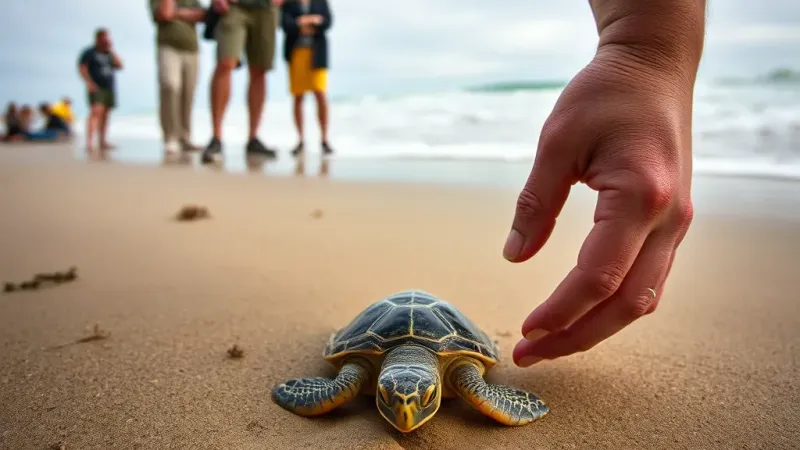
As News from California, across the nation and world - Los Angeles Times reported, a remarkable sequence of events concerning olive ridley sea turtles has captured attention across Southern California, most recently marked by the arrival and subsequent release of twenty-one olive ridley hatchlings released Sunday morning in Huntington Beach.
The timeline for these particular animals began weeks prior when the eggs were laid Sept. 19 on Huntington City Beach. Following that initial discovery on the local sand, the collected eggs were carefully transferred to Long Beach in late September, where they could be managed in a controlled environment away from public hazards and environmental stressors found on public shores.
The weekend's events in Huntington Beach actually represented the second major release of young sea turtles in the coastal city within a matter of days. This latest group of animals followed an earlier milestone, wherein the first group of fifty-four olive ridley hatchlings was released early Saturday morning.
The logistics of moving these fragile animals from incubation to the shoreline involved specialized coordination among local marine institutions. Shedding light on the exact process of how the animals transitioned from their temporary housing to the ocean, the aquarium stated, "The hatchlings emerged from their nest behind the scenes at the non-profit Aquarium of the Pacific and were promptly transported back to Huntington Beach for their release," as obtained by News from California, across the nation and world - Los Angeles Times.
While many young turtles from these clutches have now successfully made their way into the Pacific Ocean, conservation, monitoring, and care work continues at the facilities handling the remaining clutches. Providing specific information regarding the ongoing incubation and care efforts at the institution, Dr. Lance Adams reported that fifty eggs from the Seal Beach nest remained at the aquarium.
The presence of sea turtle nests this season has not been restricted solely to the immediate Orange County coastline, showing a wider geographic distribution across different parts of the Southern California region. Marking another notable development in the timeline of these occurrences, a third nest appeared Nov. 1 in Ventura, far to the north.
As these vulnerable marine reptiles finally enter the ocean and begin their long-term survival struggles in the wild, federal scientific authorities have offered sober context regarding their long-term outlook and the natural hurdles they face. According to data and assessments from the U.S. National Oceanic and Atmospheric Administration, one percent of hatchlings survive to adulthood.