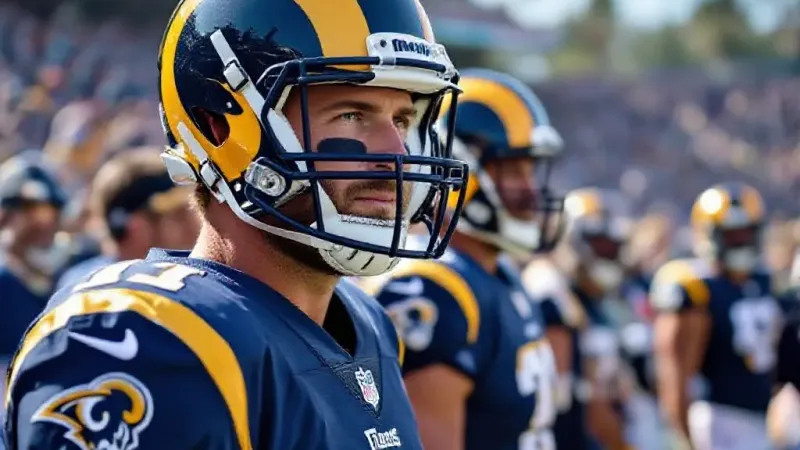
The Los Angeles Rams’ season began with a stunning Week 1 loss to the San Francisco 49ers, a game in which the team mustered only seven points. This performance has immediately brought veteran quarterback Matthew Stafford's play under scrutiny, raising questions about the team's direction for the rest of the season.
While it was considered fair to expect some regression from Stafford after his MVP-caliber season, few anticipated a complete collapse in the opener. Playing at a high level into his late 30s is a rare feat for any quarterback, particularly for someone who achieved it for the first time over a decade into their career. Observers noted that Stafford's performance was the primary reason for the team's low score in the Thursday night game.
As the Rams do not participate in preseason games, this Week 1 showing provided the first public look at Stafford's form for the season. The burden now sits with him to prove this was an isolated poor outing, as the potential for significant decline remains a point of concern until he demonstrates otherwise.
Adding to the conversation is the presence of talented quarterback Ty Simpson on the Rams roster, described by some as a “Cadillac in the garage.” Simpson's skill set appears to address several issues observed in Stafford's Week 1 performance. For instance, where Stafford struggled to score on a one-yard quarterback sneak, Simpson's mobility could offer a significant advantage in goal-line situations. While Stafford had trouble mitigating pressure, Simpson demonstrated his ability to make strong throws while on the run during exhibition games. Simpson also boasted an accuracy rate over 80% in those exhibition contests, a notable contrast to Stafford's struggles with accuracy in the opener. His capabilities could allow him to give opposing defenses fits, much like Brock Purdy has done for other teams.
Some argue that Stafford represents a prototypical quarterback for an era that no longer exists in today's NFL, where mobility is increasingly considered a requirement, not merely a bonus. Deploying an immobile quarterback, it is suggested, means the Rams are leaving significant offensive potential untapped.
This isn't without precedent. Ahead of the 2015 season, few expected Brock Osweiler to earn starts over Peyton Manning. However, Manning was eventually benched around Week 10 after battling injuries and losing arm strength. The Denver Broncos, despite Osweiler not being their long-term solution, still found it worthwhile to explore alternatives at the position.
Now, questions are surfacing about how many more challenging games it would take before the Rams entertain the idea of giving Simpson an opportunity. While Stafford could certainly bounce back in the coming games and prove the Week 1 disaster was an anomaly — perhaps attributable to jet lag or rust — it is also possible this performance marks the first sign of a sustained decline. By virtue of the Week 1 outcome, the Rams have invited a quarterback controversy. Simpson was drafted with a view towards the 2027 season and beyond, but the team may find itself needing him sooner than anticipated.