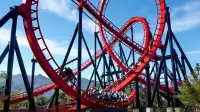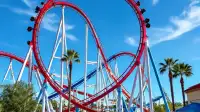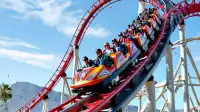
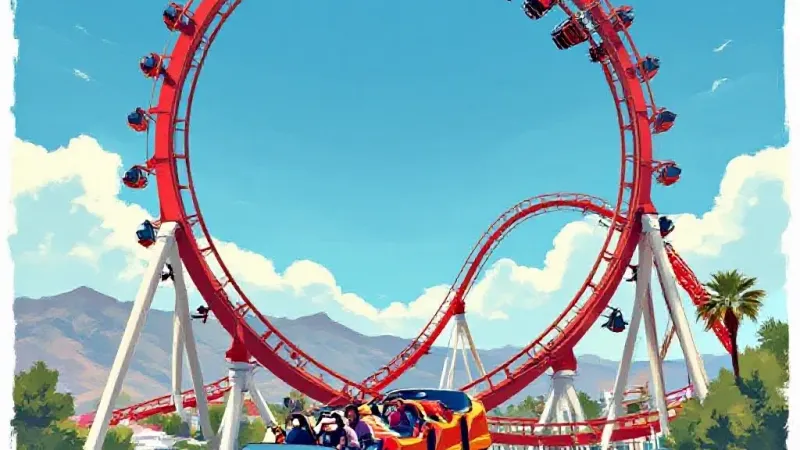
Six Flags Magic Mountain announced Tuesday that its prominent X2 roller coaster is permanently closed. The decision comes after the ride accumulated a history of reported injuries, some of which resulted in deaths.
The coaster, known for its unique seats that spin 360 degrees, had been temporarily shut down in July following reports of back-to-back brain injuries among riders.
Brian Oerding, president of Six Flags Magic Mountain, addressed the closure in a statement. He acknowledged that while X2 consistently passed various safety tests, the park decided to close the ride because it was "the right thing to do." Oerding emphasized that ride safety is fundamental to their business, and guest confidence issues are taken seriously.
Opened in 2002 as 'X,' the ride quickly experienced challenges. Months after its debut, it required closure for design flaw repairs. In 2007, it was closed again to replace its original trains with lighter models, reopening the following year as X2. Despite its troubled operational history, Magic Mountain stated that over 16 million people have ridden the attraction.
The closure brought a measure of relief to families affected by incidents on the ride. Anne Hawley, whose 22-year-old son, Christopher Hawley, died in 2022 after riding X2 and losing consciousness, expressed her feelings after learning of the permanent closure. Her family had settled a lawsuit against Magic Mountain in August. "We have tried for four years to do the best we can to spread awareness," Hawley said. "They finally listened."
Other lawsuits have also connected X2 to severe injuries. Court records show Hilda Farias, 28, developed a brain bleed that led to her death in 2010 after riding the coaster. In separate suits, Sheila Katerelos claimed a traumatic brain injury in 2020, and Lucy Alvarez alleged a similar injury in 2021, leading to "great physical, mental and nervous pain and suffering" after riding X2.
A report in August by CNN highlighted that X2 had been linked to more than a dozen serious injury reports and hospitalizations over two decades, including the deaths of Hawley and Farias. That report also detailed two instances in July where individuals suffered brain hemorrhages requiring surgical intervention after riding X2.
Following the July incidents, the California Division of Occupational Safety and Health, the state agency overseeing amusement parks, initiated an inspection into the ride. According to spokesperson Denisse Gómez, that investigation is still underway.
For some, the closure marks a shift in the roller coaster world. Martin Lewison, a professor and seasoned roller-coaster enthusiast at Farmingdale State College, acknowledged it as "a sad day for the coaster enthusiast world." However, Lewison, who is also a Six Flags shareholder, conceded that closing the ride made sense given its injury record and the legal risks to the company.
Concerns about the safety of thrill rides and potential brain injuries are not new. As far back as 2001, a report by The Times noted several studies suggesting a link between specific brain injuries and thrill rides, though the data at the time was inconclusive. That same year, a rider on Magic Mountain’s Goliath coaster died from a brain aneurysm. The Los Angeles County coroner concluded the ride did not cause the aneurysm but ruptured an existing condition, leading to another family lawsuit.
Looking ahead, Six Flags Magic Mountain is preparing to open the Thrill Glider next year. The park describes the new attraction as featuring a "suspended glider train design combined with over half a mile of twisting, turning, diving track built into the park’s unique mountainside." In its announcement, Six Flags proclaimed, "Where else than at the Thrill Capital of the World would you expect to find a next-generation, first-of-its-kind coaster?"