Southern California residents know a new museum opening in Los Angeles often means another ticketed experience, but the Lucas Museum of Narrative Art is set to offer more than just its galleries when it officially opens its doors on September 22. While its Star Wars props and unique architecture have drawn attention, some of the most distinctive features of the new Exposition Park institution will be entirely free to access: its expansive gardens and its public-facing library.
Referred to by George Lucas as a “temple to the people’s art,” the museum, designed by Ma Yansong of MAD Architects, aims for accessibility. While adult admission to the main galleries will be $25 (kids 17 and under are free), the surrounding green spaces and the library require no ticket at all. This commitment to public access extends to the museum’s setting, transforming what was once a parking lot into a community asset. Lucas Museum CEO Tracey Bates noted that she wants visitors to feel “transported somewhere else, which is the joy of storytelling—which is what the museum is all about.”
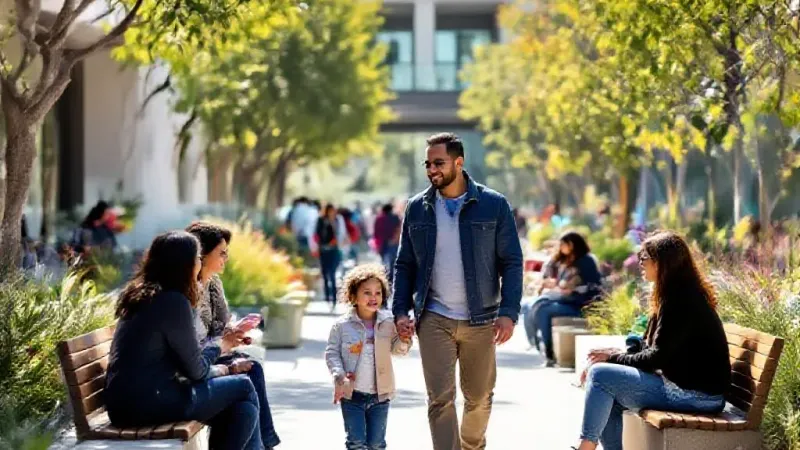
Designed by Mia Lehrer and the Studio-MLA team, the multi-tiered gardens are a mix of open grassy areas and winding paths. Dense clusters of native plants, cultivated off-site for six years, now provide significant greenery. Visitors can enter from Vermont Avenue near the Metro station, Bill Robertson Lane across from the Natural History Museum and Coliseum, or directly from the parking garage. Throughout the gardens, various sculptures offer familiar and unexpected sights. Star Wars fans will find a bronze statue of Jabba the Hutt, with Leia, a depiction of Padmé fighting a nexu, and a fountain featuring Yoda and Grogu. Other art includes sculptures of Rosie the Riveter, King Kong stop-motion animator Willis O’Brien, and Prune Nourry’s Terracotta Daughters. A shallow amphitheater along the southern end of the park space is slated for programming, with Bates expecting monthly “large activations” on select Fridays or Saturdays, some free or via accessibly priced tickets. Bates hopes the gardens become a part of daily life for locals, inviting people to unwind before an LAFC match, after school, or for a picnic after visiting the California Science Center, aiming to “inspire creativity here.”
Perhaps the most imaginative space on campus, the Lucas Museum’s library offers a stark contrast to typical research institutions. Light streams into a warm, Arts and Crafts–style sitting area, inviting visitors to explore three floors of art books. Library director Joan Jocson-Singh emphasizes that free admission “dismantles the notion that libraries are for a specific type of person,” aiming to draw in “all walks of visitors.” On the first floor, guests can freely peruse books mirroring the museum’s gallery themes, covering comics, illustration, graphic arts, from Norman Rockwell to Dungeons & Dragons, and the Separate Cinema Archive of early Black filmmaking. Jocson-Singh’s favorite selections, marked by covers facing out, range from Hollywood portrait photographers to He-Man illustrations and Babar. Oversized Taschen editions, often kept behind shop counters, are openly displayed on tables, showcasing X-Men comics, Donald Duck drawings, and the fantasy art of Frank Frazetta. These are not merely everyday books; Jocson-Singh notes that some are “out of print and rare,” offering unique insights into George Lucas and Mellody Hobson’s vision and “academicizing art that hasn’t had a home before.”
While the mezzanine and third-floor shelves are reserved for researchers, they hold fascinating collections, including military history, vehicles, the occult, and Americana from Lucas and Hobson’s personal collection at Skywalker Ranch. Other volumes on modernism, cubism, and Canadian landscape art were donated by Steve Martin. All books are non-circulating, and a bright orange trolley with a Yoda photo reminds readers, “Reshelve, do not. Leave books here, you must!” A full catalog will be available on the museum’s website after the September 22 opening. Jocson-Singh shared the rewarding experience of seeing “children come in and light up,” and adults engaging with books “that you typically don’t see in a museum library.”