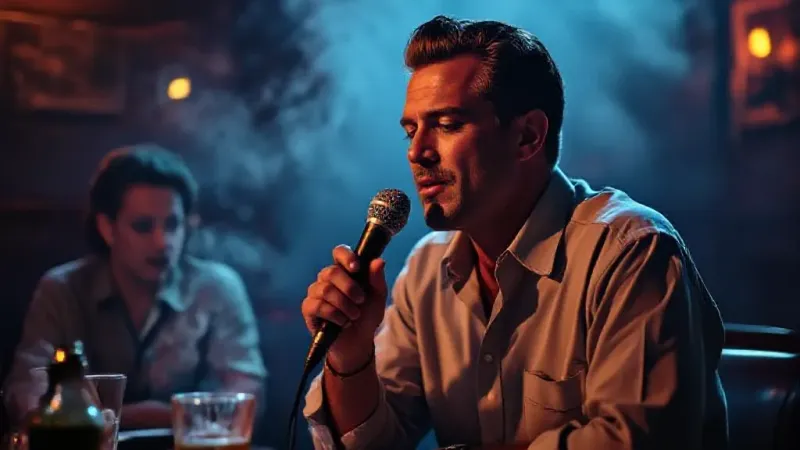
In February 1963, comedian Lenny Bruce found himself on the witness stand in Beverly Hills Municipal Court, facing obscenity charges that stemmed from his performances at The Troubadour on Santa Monica Boulevard and The Unicorn coffeehouse on the Sunset Strip. The charges involved specific words and bits, including saying “asshole” and imagining an “unnatural act” with the Lone Ranger, Tonto, and a horse.
Bruce, who developed his jazz-like, improvisational act in Southern California strip clubs and jazz joints during the mid-1950s, told the prosecutor his goal was nothing less than "compassion for the human race." He explained he wanted people to “stop punishing each other” and “open up the jails,” calling his own trial “insanity” and “preposterous” — a waste of taxpayer money. His routines often targeted organized religion, bigotry, and hypocrisy, using unfettered language that would later become standard in stand-up comedy.
This was not Bruce’s first run-in with the law, nor would it be his last; he also faced narcotics busts which he attributed to the vice squad’s efforts to punish his act. He even carried a doctor’s note authorizing intravenous methamphetamine for “episodes of severe depression and lethargy” to deter questions about needle marks.
During the Beverly Hills trial, one of the prosecution’s witnesses was Sherman Block, then a young vice squad sergeant, who had arrested Bruce at The Troubadour in October 1962. Block, who later became Los Angeles County Sheriff, admitted under questioning that he’d found parts of Bruce’s act funny. He also stated he regarded homosexuality as a perversion, thus Bruce’s references were perverted. Bruce himself, comparing his work to that of satirist Jonathan Swift, stated his material appealed “only the most perverse. Or illiterate.” The jury ultimately deadlocked 7 to 5 in favor of acquittal, and prosecutors dropped the case, but local vice cops reportedly continued to pursue him.
By August 1966, Bruce was a weary man, broke and prematurely aged. His groundbreaking act had devolved into a joyless recitation of his legal troubles. When he died of a heroin overdose at his Hollywood home at age 40, Los Angeles authorities brought journalists and photographers to view his corpse for hours. Times critic Charles Champlin noted his “sick death, alone and naked.” First Amendment scholar Ronald K.L. Collins observed that the “net effect was to leave this image of Bruce as this dirty, vulgar drug user.”
However, many friends linked his decline to law enforcement harassment. Phil Spector, who produced his records, declared in a Billboard ad that Bruce “died from an overdose of police.” Today, Bruce is seen as a “cultural hero” and a “saint of comedy.” Comedian Eddie Izzard said Bruce “died for freedom of speech,” while Playboy publisher Hugh Hefner stated, “Lenny died for our sins.”