
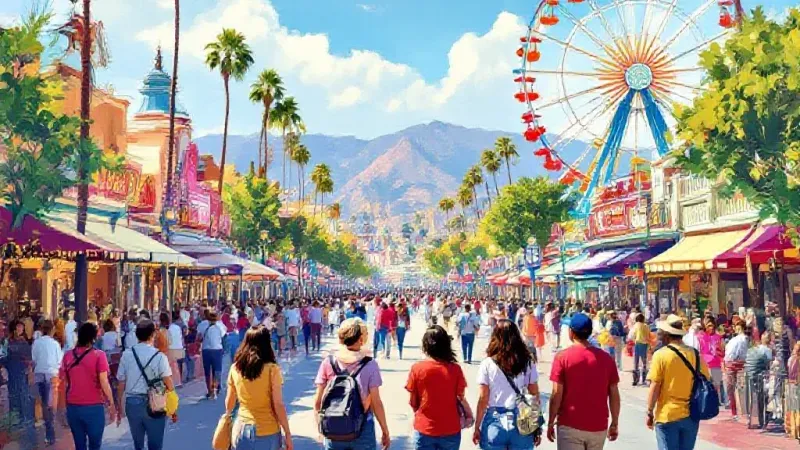
Disneyland quietly increased some of its ticket prices this week, a tradition that typically arrives in the fall. However, this year's adjustments are among the smallest the Anaheim park has implemented in recent history, focusing on mid-level single-day, single-park options.
The lowest-priced ticket, which stands at $104, did not change, nor did the highest-priced single-day ticket at $224. Most increases for single-day, single-park tickets were limited to $5. Prices for the popular Magic Key annual pass program, multiday tickets, and parking, which remains at $40, also held steady. This marks a notable shift from last year, when the highest-priced single-day ticket jumped by $18.
While the Walt Disney Co. offered no official statement on the changes, Disneyland Resort officials indicated an awareness that visitors are more closely managing their finances in 2026. Thomas Mazloum, chairman of Disney Experiences, commented to CNN that the company aims to "put guests at the center of our decision making," noting that "families are watching every dollar."
This restrained approach may signal that the resort has pushed its pricing close to its current limits. Earlier this year in May, Disney reported a 1% decline in attendance at its U.S. parks, which was attributed to a decrease in international visitors. By August, however, attendance had recovered, up 3% from the previous year’s third quarter, largely due to summer deals. Observational reports suggest summer crowds at Disneyland were manageable, possibly influenced by factors like the World Cup, high heat, and a general tightening of household budgets.
In a move likely to be welcomed by its most frequent visitors, Disneyland President Jill Estorino announced the removal of the no-show penalty for annual passholders. Passholders can now cancel reservations up to 11:59 p.m. on the day of their visit, a significant easing from the previous requirement to cancel the night before and a system that restricted future reservations after three no-shows. While reservations are still required for crowd management and staffing, the updated system is more user-friendly.
Other minor price adjustments include a $1 increase to the top price of the Lightning Lane line-skipping feature, now $38, and the park-hopper add-on for single-day tickets seeing a $5-$10 increase depending on the day. Food prices also saw increases earlier this year. The Disneyland Resort remains a premium entertainment experience, but the current modest adjustments suggest the company is responding to the economic climate.
Meanwhile, just a freeway ride away, Universal Studios Hollywood continues to grapple with neighborhood concerns over its new Fast & Furious: Hollywood Drift coaster. The ride is drawing complaints from residents in Toluca Lake due to the sound of rider screams drifting into the residential area.
Last Wednesday, Universal Studios Hollywood held a meeting with more than 350 local residents on its studio lot. The session, which was closed to the media, did not yield a compromise between the park and its neighbors. Universal has committed to not operating the coaster before 9 a.m. through the end of the year and has installed a new sound barrier measuring 1,900 square feet, featuring a 63-foot-tall and 31-foot-wide sail. Despite these efforts, residents say the mitigation is not yet sufficient.
Neighbors have reported significant disruptions to their lives, from being unable to open windows due to noise, to impacts on home-based businesses, and even difficulties completing SAT prep tests. Residents shared data at the meeting suggesting that the sound of screams can induce stress-related responses. County Supervisor Kathryn Barger, who attended, acknowledged that the meeting's dialogue made clear the lives of surrounding residents are being impacted and disrupted, and she encouraged ongoing communication between all parties.
Both Southern California theme parks are navigating a complex landscape of operational costs, visitor expectations, and community relations, demonstrating that even the most established entertainment destinations must adapt to changing circumstances.