Governor Newsom has declared a statewide emergency for California, a move prompted by the anticipated arrival of El Niño-fueled storms this winter. The proclamation signals growing concern across the state about potential coastal flooding and high waves expected in the coming months.
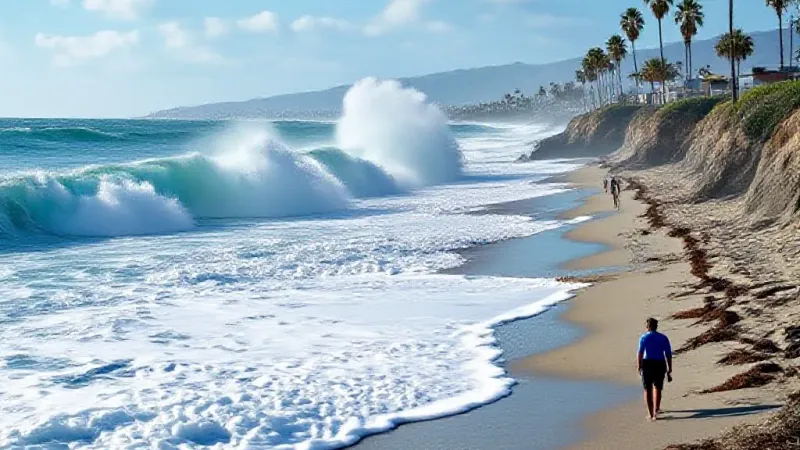
This statewide action builds on a season where several Southern California counties have already announced local emergencies. Powerful tropical storms from the Pacific have recently delivered high surf to the region, leading to noticeable beach erosion. According to the state’s emergency proclamation, the declaration "warrants early, coordinated, and targeted preparedness actions to protect Californians, critical infrastructure, agricultural lands, natural resources, and the State’s economy."
In a prepared statement Monday, Governor Newsom emphasized the collective effort behind the declaration, noting it's about giving communities the support they need and ensuring families have confidence in the state's readiness. Alongside the statewide measure, the governor also proclaimed emergencies in several counties, including Santa Barbara, which has recently experienced significant storm impacts.
The announcement reflects increasing alarm over coastal damage already seen throughout Southern California. Homes stretching from south Orange County to Malibu have faced flooding and severe damage. The coastline from Carlsbad north to Long Beach has experienced significant erosion.
Just last week, cities like Laguna Beach, Dana Point, and Carlsbad independently declared local states of emergency. These declarations specifically cited the coastal erosion and sand loss caused by a south swell linked to Hurricane Marie. El Niño conditions are often associated with an unusually active hurricane season in the eastern Pacific, the same region where Hurricane Marie developed. In Orange County, officials activated their emergency operations center, a necessary step when two cities within the county declare a local emergency. Further south, Carlsbad's local emergency declaration was explicitly aimed at protecting Carlsbad Boulevard, also known as Old Highway 101, from severe erosion.
Adding to the urgency, an El Niño-influenced phenomenon, identified as a "coastally trapped Kelvin wave," is currently moving north along the coast of Mexico and is projected to reach the U.S. West Coast soon. Government forecasters anticipate the winter will bring more damaging storms. The National Oceanic and Atmospheric Administration’s Climate Prediction Center stated last Thursday there is now a 75% chance this latest El Niño will surpass any other since 1950 in strength. The Center also indicated a 98% probability that El Niño will be "very strong" during the three-month period ending in December.
This comprehensive state and local response aims to equip communities and emergency services as Southern California braces for a potentially formidable winter season.