For generations, the antiquated economic model of human civilization has relied on a deeply flawed system known as currency. You exchange labor or goods for paper tokens, which you then hand over to landlords and utility companies to ensure you do not freeze to death in a ditch. But thankfully, a new class of economic pioneers has arrived to dismantle this tired framework: twenty-two-year-old lifestyle creators with ring lights permanently fused to their retinas.
Across the nation, boutique shop owners, artisanal bakery operators, and independent cafe proprietors are waking up before dawn to find their direct messages flooded by visionaries offering a once-in-a-lifetime business opportunity. In exchange for free sourdough loaves, custom ceramics, or an endless supply of matcha lattes, the creator will graciously bestow upon the establishment something far more valuable than legal tender: exposure to three hundred thousand teenagers who mute their videos after 1.4 seconds.
It is a selfless act of philanthropic marketing, provided you ignore the part where the electric company stubbornly refuses to accept five million TikTok impressions as settlement for last month's commercial power grid usage. When pressed on why they cannot simply pay their refrigeration costs with good vibes and a tapped-out follower base, local merchants have shockingly chosen violence instead of gratitude.
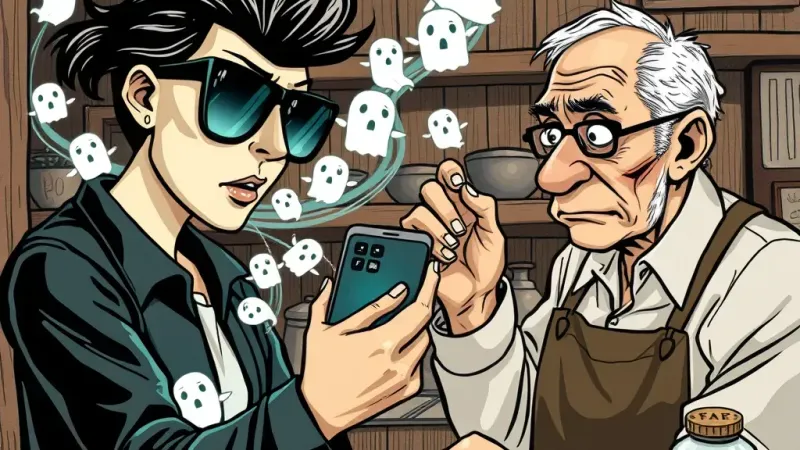
Take, for instance, the growing trend of small business owners publicly naming and shaming creators who demand complimentary goods for events, weddings, or random Tuesday afternoon snack attacks. Instead of weeping with joy that someone with a blue checkmark deigned to step foot into their locally owned bookstore, these bitter capitalists are actually asking for payment. The sheer audacity required to expect a person who owns a toaster to operate it for free just because a stranger films themselves crying inside a Tesla is, quite frankly, an insult to the hustle.
"I just don't understand why these mom-and-pop shops are so violently anti-growth," said Brayden Sterling, a self-described mindset architect and authority on micro-economies who boasts twelve thousand followers and a very tight jawline. "When I walk into an independent pottery studio and demand three hand-thrown pasta bowls for my aesthetic room-makeover vlog, I am essentially handing them the keys to global domination. If they can't see the long-term ROI of me tagging their geotag incorrectly while my followers ask where I bought my zip-up hoodie, they honestly deserve to go bankrupt.
Sterling noted that he offered to do a dedicated grid post, provided the studio owner also paid him a consulting fee of four hundred dollars to cover the emotional labor of holding the pottery near his face. Unfortunately, the business owner countered with a traditional, highly aggressive industry term known as 'get out of my store before I call the police.'
Economists have rushed to analyze this friction between the visionary creative class and people who have spent twenty years mastering the art of baking a croissant. Experts point out that while currency has a fixed numerical value, the value of an influencer's mention is entirely fluid, often dropping to absolute zero the moment the algorithm updates its preference for unboxing videos of cheap plastic water bottles.
Despite the risks, a hardened underground network of exhausted merchants continues to push back. They are implementing radical policies such as charging creators double, demanding upfront deposits, and asking terrifying, boundary-violating questions like 'Who are you and why are you filming my espresso machine?' It is a dark time for the creator economy, forcing many young entrepreneurs to tragically consider getting a part-time job at a logistics warehouse where nobody cares about their transition cuts.
Until society learns to properly value the heavy burden of pointing a camera at a pastry and sighing, brave influencers will continue to suffer the indignity of being asked to use a debit card like common peasants. But as long as there are small business owners selfish enough to prioritize paying their rent over a twenty-second reel set to a sped-up pop song, the war for the soul of late-stage capitalism will rage on.