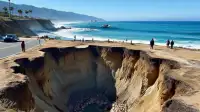
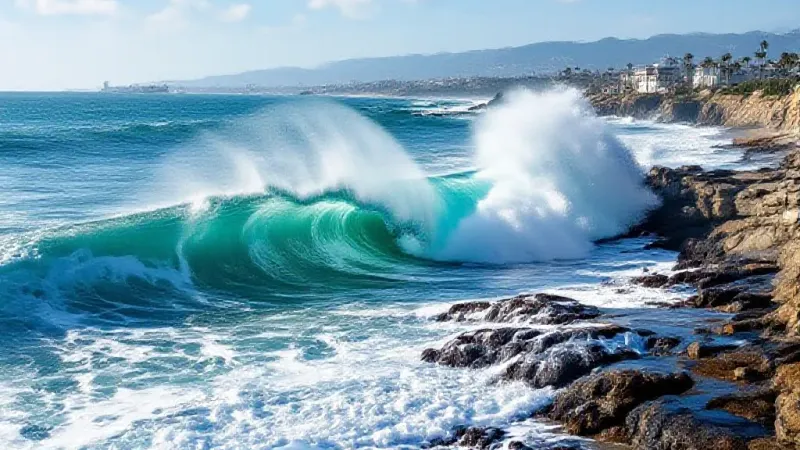
The powerful hurricane-driven swells that have recently rolled into Southern California have done more than just provide big surf; they’ve also stripped away decades of sand at Newport Beach, revealing long-buried infrastructure near the popular surfing spot, the Wedge. Along the shoreline, particularly close to the west jetty, photos and videos circulating online depict piles of rocks, chunks of concrete, and rusted metal rods emerging from the newly exposed sand.
Newport Beach Lifeguard Battalion Chief Adam Yacenda confirmed that the department is aware of the significant sand erosion and the “relics getting exposed down there.” He elaborated that the U.S. Army Corps of Engineers constructed a pair of jetties many decades ago to stem beach erosion and safeguard oceanfront homes near the entrance of Newport Harbor. Yacenda noted that "a lot of sand has been carved away, uncovering things that haven’t seen the light of day in decades," including visible PVC pipes, wires, and even a railway tie.
These strong storm swells coincide with a developing El Niño, a climate pattern characterized by warming ocean waters in the central and eastern tropical Pacific, which often brings increased rainfall. The previous 2015-16 El Niño pattern was cited as a cause for record beach erosion along California’s coast. Since July, at least three hurricanes, including Hurricanes Fausto and Genevieve, have formed in the central and eastern Pacific, generating life-threatening waves, powerful rip currents, and high surf warnings for Southern California shores.
The effects of the recent weather patterns aren't confined to Newport Beach. Just this month, the Los Angeles County Department of Beaches and Harbors announced the temporary closure of Point Dume State Beach. This decision followed extreme erosion caused by high tides and surf, which damaged restrooms and left the bluff edge unstable, with drop-offs up to eight feet in certain areas. Further south, in Carlsbad, strong surf and high tides also stripped away much of the sand and damaged a parking lot at Tamarack State Beach, even though that beach had received approximately 400,000 cubic yards of sand dredged from a nearby lagoon earlier in the year.
The sudden erosion in Newport Beach has sparked both local curiosity about what precisely lies beneath the sand and safety concerns for surfers who frequent the Wedge. Some residents speculate that the newly exposed material could be part of an old groin, a shorter barrier typically built on open beaches to prevent erosion and widen the sandy area, which might have existed long before it became part of the expanded jetty system. The city of Newport Beach did not immediately respond to questions regarding the specific nature of the exposed material.
This recent activity at the Wedge follows what was already a busy summer for Newport Beach lifeguards. In June alone, they undertook roughly 12,000 preventive actions, which included moving individuals out of hazardous situations, and performed more than 500 ocean rescues.