
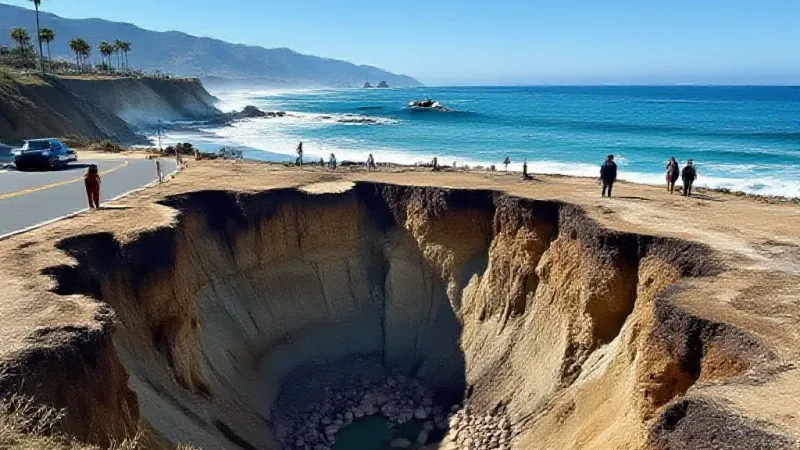
Malibu, often known for its serene coastline, found itself in a less tranquil state this week after a significant sinkhole opened up directly in front of a beachside property owned by actor Nicolas Cage. By early Tuesday, the gaping hole was reported to be approximately 25 feet deep and stretched about 30 by 60 feet wide, dramatically altering the landscape.
The immediate impact was severe for many who call the area home. City officials confirmed that most residents on the street were ordered to evacuate. Seven homes received red tags due to hazardous conditions, while an additional 24 homes were red-tagged because emergency vehicles would not be able to access them if needed.
The City of Malibu attributed the sinkhole's formation to "coastal erosion from high waves and tides associated with Hurricane Marie." Looking ahead, the city is already "preparing for potential strong storms, high surf, heavy rain, mudslides and coastal erosion this winter associated with forecast El Niño conditions." This anticipation of further severe weather adds another layer of concern for those living along the shore.
Mitchell Leib, a 67-year-old resident who has lived in his Malibu home for a decade, described the harrowing experience of waves crashing against the coast this week. He recounted boulders smashing into the piles supporting his house, making them vibrate "like a guitar string" and shaking his entire home. On Thursday afternoon, Leib was seen outside a Malibu shopping center, consulting a tide chart to determine when the water would recede enough for him to survey the full extent of the damage. After days of high tides and the remnants of Hurricane Marie's battering, Leib said his wife has suggested they sell their house and move. "We’re looking to have peace and quiet in our lives, Not fear," he stated, reflecting on the unsettling turn of events.
Not all residents shared the same level of alarm, or at least did not show it as overtly. Former Malibu Mayor Andy Stern, whose own home was among those evacuated due to access issues for emergency vehicles, expressed a more measured view. Stern, also a real estate agent, suggested that the sinkhole was a singular event, likely caused by a combination of a burst water pipe and the relentless waves, rather than a sign of insurmountable future problems.
Meanwhile, residents living on higher ground near the beach expressed concern for their neighbors and the broader coastline. Jo Giese, who resides with her husband in a cliffside home above the ocean, found herself in an unexpected conversation with her insurance company. While on the phone for an unrelated matter, she decided it was prudent to ask if her policy covered a sinkhole engulfing her home, despite believing the chances were slim. She couldn't help but wonder, given that two of her friends were among those ordered to evacuate.
Giese also observed contractors at work, noting a long line of concrete trucks heading toward the sinkhole a few days prior. A contractor informed her the concrete was intended to fill the void. However, upon her own visit to inspect the site, the hole appeared unchanged. Another contractor later told her the concrete had simply washed out to sea.
Malibu City Manager Joseph Irvin had previously indicated that construction and repair work would take about four weeks. For residents like Leib, the question remains. He hasn't yet decided what this event signifies for his family's future in Malibu, pondering whether it's an isolated occurrence or indicative of a larger, ongoing challenge for the area.