

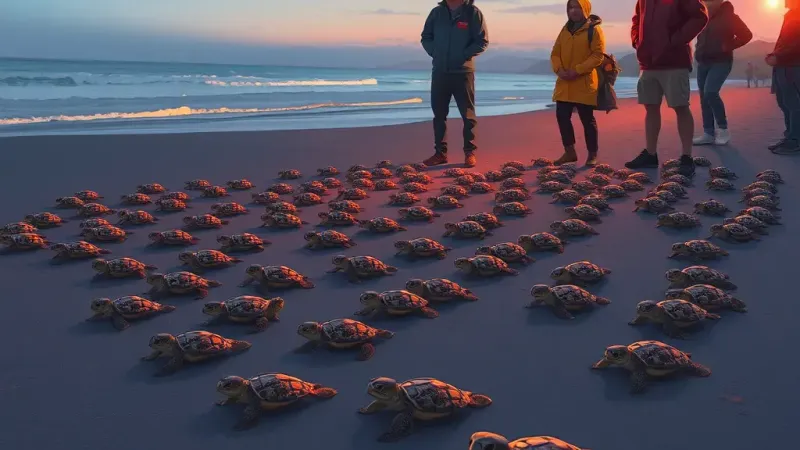
Endangered olive ridley sea turtle eggs that were removed from two different Orange County beaches in September due to high surf have successfully hatched following a fifty-eight-day incubation period, according to announcements made regarding the rescue effort. The endeavor involved multiple organizations working together to protect the vulnerable marine life after severe ocean conditions threatened the natural nests along the Southern California coastline. The U.S. Fish and Wildlife Service coordinated the response alongside regional partners to ensure the safety and survival of the clutch.
According to the Aquarium of the Pacific, teams from the facility undertook the delicate task of excavating the nests after they were discovered on the sand. Specifically, the teams recovered one hundred four eggs from Seal Beach and one hundred additional eggs from Huntington Beach. The initial discoveries of the nests occurred on September sixteenth and September nineteenth, prompting immediate intervention by wildlife professionals due to the dangerous high surf conditions present along the Orange County shoreline during that period.
Following the emergency excavation, the collected eggs were transported to a controlled environment for protection and observation. Jeffrey Flocken noted that more than two hundred endangered olive ridley eggs were carefully monitored at the aquarium throughout their development. This specialized care allowed the eggs to complete their incubation safely away from the turbulent ocean waters that necessitated their removal from the original beach locations in September.
The monitoring period culminated after nearly two months, leading to the successful emergence of the hatchlings. Regarding this milestone, the U.S. Fish and Wildlife Service told a local news report, "We are excited to share that some of the olive ridley sea turtle eggs from Seal Beach successfully hatched after a 58-day incubation period." This development marked a significant moment for the conservation efforts surrounding the species in the region.
Once the hatchlings emerged and were deemed ready, wildlife officials arranged for their return to the natural marine environment. The operation required precise timing to give the young sea turtles the best possible chance of survival upon re-entering the ocean. Describing the culmination of the rescue and hatching process, the U.S. Fish and Wildlife Service told a local news report, "Working with our partners, we carefully released them from the beach in the dark early hours of this morning."