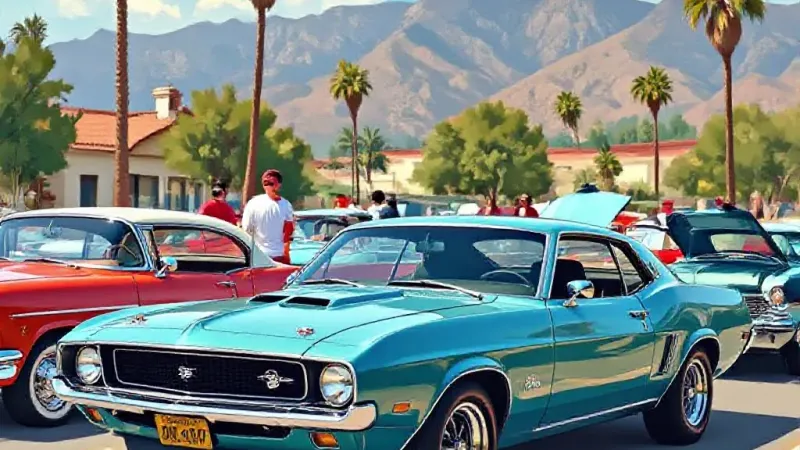
Southern California's streets are known for their classic cars, from gleaming Impalas to vibrant Monte Carlos and powerful Trans Ams. These vintage vehicles, an iconic part of the region's automotive heritage, have often faced challenges with California’s smog check requirements, leading many to sit idle in garages. That's set to change for some, thanks to a new law championed by comedian and auto collector Jay Leno.
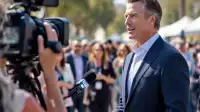
Governor Gavin Newsom signed Senate Bill 1392, widely known as Jay Leno’s Law, into effect on Wednesday during a visit to Leno’s Burbank garage. The new legislation expands smog check exemptions for certain collector cars, offering relief to enthusiasts across the state.
Under current law, cars manufactured before the 1975 model year are already exempt from biennial smog check requirements. Jay Leno’s Law will introduce a phased-in exemption for collector cars built between the 1976 and 1985 model years, provided they are not used as a primary mode of transportation.
The new exemptions will begin on January 1, 2028, initially applying to qualifying cars manufactured before the 1981 model year. Each subsequent year, eligibility will extend by one additional model year, until 2033, when vehicles manufactured through the 1985 model year will be included. To qualify, owners must demonstrate their vehicle is not for daily use, either by carrying collector-car insurance or by documenting that the car is driven fewer than 1,000 miles annually. The exemption is designed for cars used primarily for shows, parades, charitable events, and historical exhibitions.
Maintaining vintage vehicles is often a labor of love, and the biannual smog check has presented an additional hurdle. State Senator Dave Cortese, a co-author of the bill, noted that not all gas stations are equipped to provide the specialized service needed for older cars. Furthermore, getting vintage vehicles to meet current emissions standards can be tough, as decades-old systems deteriorate and replacement parts are hard to find. Leno himself had previously highlighted the difficulty many owners faced, arguing that the existing system unintentionally put law-abiding enthusiasts at risk.
The bill garnered significant support from the classic car community, including more than 1,700 letters from the lowrider community. Lowriders, customized classic cars known for their modified suspensions, hold a cherished place in California’s Chicano community and have historically faced fines and cruising bans. Despite past restrictions, interest in lowriding has surged, with caravans of custom cars now a familiar sight on streets like Van Nuys Boulevard.
Coinciding with the signing of Jay Leno's Law, Governor Newsom also approved Assembly Bill 2541 during his visit to Leno's garage. Authored by Assemblymember Mark González of Los Angeles, this bill establishes a special license plate to honor California’s lowrider heritage. González underscored the cultural significance, describing lowriding as an expression of Chicano and Latino pride.
Securing the passage of Jay Leno’s Law, which will incrementally increase emissions from a small number of vehicles, was not a simple task. Environmental and public health advocates have consistently opposed new smog check waivers, citing concerns that they contribute to exhaust emissions like nitrogen dioxide, which are detrimental to human health. California already faces some of the nation's worst air pollution, with exhaust being the largest source of greenhouse gas emissions. Previous attempts to loosen smog check requirements for older cars, including a similar bill championed by Leno last year, failed to reach the governor’s desk.
However, supporters of SB 1392 successfully argued that the environmental impact would be limited. Senator Cortese pointed out that less than 1% of registered cars in California fall within the model-year range covered by the new law, and these vehicles are typically driven only short distances. State Senator Shannon Grove of Bakersfield, a co-author, celebrated the bill’s passage with bipartisan support, noting two years of effort and overwhelming backing from car enthusiasts, mechanics, and families who pass down these vehicles through generations.
The new exemptions will begin rolling out in 2028, offering a path for more of California’s classic cars to remain on the road and continue their role in the state's automotive culture.