
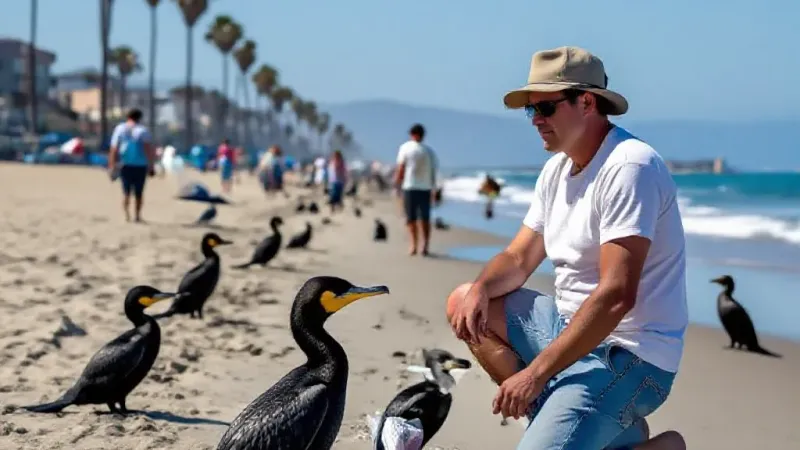
More than 40 dead cormorants washed ashore on Venice Beach this past weekend, an unusual sight for the popular stretch of coastline. The black birds, known for perching on rocks and drying their outstretched wings, were found Sunday morning strewn along the shoreline amidst typical weekend beach activity. Swimmers and loungers largely ignored the dozens of carcasses.
County employees from the L.A. County Department of Beaches and Harbors began clearing the birds Sunday morning, working into the afternoon. Nicole Mooradian, a spokesperson for the department, noted the quantity was uncommon, stating, "We don’t usually see that many." While the department typically photographs dead seabirds and transports them to local wildlife organizations for analysis upon request, this weekend, they were short-staffed and used "normal disposal services" for the animals.
The specific cause of death for these cormorants remains unknown. The L.A. County Department of Public Health reported that by the time they could evaluate reports of the dead birds, the animals had already been removed from the beach.
This incident in Venice, while localized, fits into a larger pattern observed across California. Since last fall, wildlife experts have been tracking an influx of dead and emaciated seabirds washing up on beaches throughout the state. Many of these deaths are thought to be tied to a lack of food, a consequence of an extreme marine heat wave. This heat wave is causing fish, the cormorants' primary prey, to travel north or deeper underwater, making them harder for birds to find. Parasites and infections are also believed to be contributing factors to the wider seabird die-off. Brown pelicans and other coastal birds have also been appearing in large numbers at rescue centers as the Pacific heat wave continues to affect coastal waters.
Cormorants are common in Southern California, with three species present: Double-crested, Brandt’s, and Pelagic. These birds are skilled divers, hunting fish underwater, often with only their neck and head visible when swimming. Up close, their eyes are noted for their vibrant colors.
While avian flu has not been identified as the cause of this recent surge in seabird deaths, its detection among marine life in the Bay Area this spring prompted the California Department of Public Health to issue an advisory. The public is advised to stay at least 150 feet away from all marine animals and seabirds when possible.
The California Fish and Wildlife Department offers further guidance for beachgoers. If a debilitated seabird is encountered, residents are advised not to touch it, attempt to feed it, remove any embedded fishing hooks, or take photographs with it. Instead, if a seabird is stranded, contact a local wildlife rehabilitation facility. Dead birds can be reported directly to California Fish and Wildlife. This weekend’s event serves as a stark reminder of the environmental pressures facing Southern California's coastal ecosystems and its wildlife.