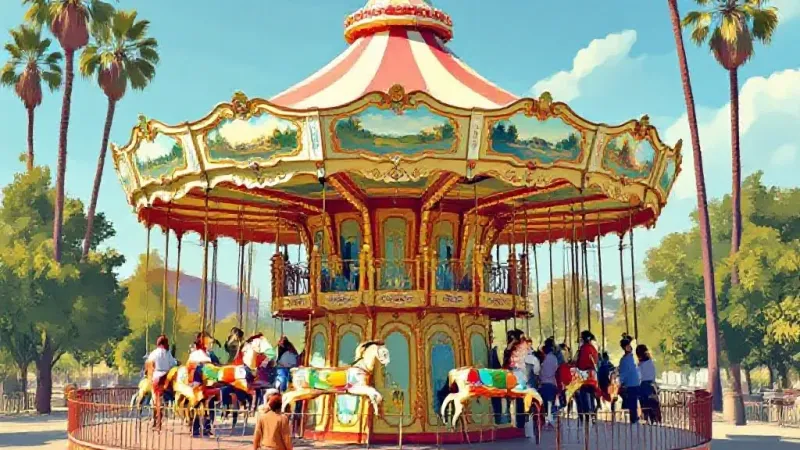
The Griffith Park merry-go-round, a quiet fixture near the park's ranger station in Los Angeles, has stood largely motionless for years, many of its 66 wooden horses caught mid-gallop. This year, the carousel marks its 100th anniversary, and after being largely shuttered since the COVID-19 pandemic—save for a brief return in 2022—a dedicated effort is now underway to bring it back to full, glorious spin.
The city of Los Angeles acquired the carousel last year for $1 million, a price Tracy James of the Department of Recreation and Parks called "a veritable bargain" for such a significant piece. James, who leads the restoration project, noted a real concern that the merry-go-round might fall into private hands. The restoration itself is no small feat, expected to span at least two years and cost millions, transforming it back into what James described as "the jewel in the middle of the city."
More than just an antique, the merry-go-round holds a special place in L.A.'s collective memory. It’s where Walt Disney is said to have first envisioned Disneyland, dreaming of a shared entertainment space for adults and children while watching his daughters ride. Beyond its connection to the entertainment giant, it has witnessed civil rights actions and 1960s-era "love-ins," serving as a backdrop for significant moments in the city's history.
For many, its return is deeply personal. Wendy Osmundson recalled how the carousel once saved her family's Christmas decades ago after her mother's kitchen burned down. Osmundson said she and her three sisters, all adults at the time, rode it when she was 21, adding, “We were adults, but it was really great.”
Leading the charge to restore the carousel are volunteers, many of whom are veterans of the theme park industry, dedicating their expertise without pay. Kurt Sawitskas, who works at Walt Disney Imagineering, has spent weeks examining the carousel's intricate mechanisms. He expressed amazement that the 1926-built carousel, which started its life in San Diego before moving to Los Angeles in the depths of the Great Depression in 1937, remains largely intact. Sawitskas noted, “Honestly, I don’t think carousels were ever intended to last 100 years.”
The Griffith Park merry-go-round is a showcase of the Spillman Engineering Co., renowned for its horses with flowing, wind-blown manes and detailed carvings on their visible "romance" sides. Some horses feature unique elements like lion heads extending from their chests or cherubs reaching toward their faces, all adorned with jewels and real horse hair tails—though some of those have been eaten by local critters. What makes this carousel especially unique is the inclusion of horses from master carvers Charles Looff and Charles Carmel, considered among the finest craftsmen of their era.
The volunteers recognize a specific aesthetic in these older carousels. Sawitskas highlighted the depth created by the paint's thickness and the ability to discover new details with each visit. He has recruited Walt Disney Imagineering colleagues Troy Leverton and Pim Renting, who work in ride engineering, to assist with the technical restoration. Leverton emphasized the importance of bringing affordable outdoor entertainment back to the city, hoping to eventually bring his own daughter to ride it, as it's been closed since she was born.
Though volunteering their personal time, the team acknowledges the carousel's historical ties to Walt Disney and the industry they work in. A bench and one of the original horses from the Griffith Park carousel are displayed on Disneyland’s Main Street, U.S.A., further solidifying the connection. Disney's own King Arthur Carousel, also from the 1920s, incorporated design elements from the Griffith Park attraction, such as making all its animals "jumpers" to appear as if galloping.
The goal for James, Sawitskas, and the team is to return the carousel to its "original glory." This involves meticulous work like stripping away old lead paint and poring over historical books to match the horses’ original vibrant colors. The work ahead promises to rekindle a cherished piece of Los Angeles's past for future generations to enjoy.