
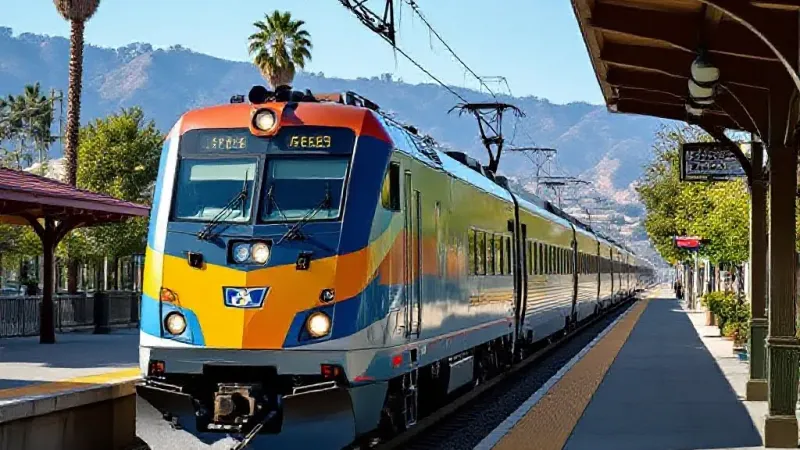
A former top executive at Metrolink has filed a lawsuit claiming he was terminated in retaliation for highlighting what he describes as unsafe maintenance practices and equipment issues. Donald Filippi, Metrolink’s former chief operating officer, filed the suit in Los Angeles Superior Court on Tuesday, alleging violations of state and federal requirements.
Filippi claims he brought his concerns about “unsafe rail equipment and materials shortages” to Chief Executive Darren Kettle on multiple occasions. According to the lawsuit, he also refused to follow directives he believed would jeopardize passenger safety, asserting that Kettle either dismissed these risks or downplayed them.
Metrolink, which serves Los Angeles, Orange, and four other Southern California counties, has not commented on the pending litigation. This isn't the first time Filippi has raised such claims; he previously filed a claim against the Southern California Regional Rail Authority (Metrolink’s operator) over alleged retaliatory conduct, which was rejected as not being brought in good faith or with reasonable cause by the authority’s claims administrator.
Filippi, a veteran transit executive who joined Metrolink in 2018 after working for Union Pacific Railroad, the California Public Utilities Commission, and the North County Transit District in San Diego, states he was fired in June without prior warning. He was told at the time that Metrolink had “decided to go in a different direction,” the complaint states. Filippi is seeking unspecified compensation, including for emotional distress, along with reinstatement, back pay, and a jury trial. “The clock is ticking and if nobody does something about the current situation, something could happen,” Filippi said. “Someone could get hurt, or worse.”
The lawsuit attributes several incidents to Metrolink’s alleged improper care of its train fleet. According to the complaint, in October 2025, a Metrolink train collided with another near Union Station, resulting in multiple injuries, due to a malfunctioning air valve. Filippi alleges that Kettle later declined to approve a fix to avoid potential train delays at Union Station.
This past spring, the suit claims, a Metrolink train carrying hundreds of passengers became stuck in a tunnel when a fuel manifold failed. Passengers reportedly waited for over an hour without working lighting, air conditioning, or ventilation in extreme heat before a second train could tow it to safety. Months later in July, a similar situation occurred when another train lost power and broke down in a tunnel in Anaheim Hills, with several passengers needing treatment for heat exhaustion.
Filippi’s complaint details that Metrolink allegedly uses used parts from other trains to replace broken equipment, creating safety risks and sidelining trains that are stripped for parts. He argues that new parts should be used instead, and the “root cause of those failures” should be addressed, rather than continuing this practice. The lawsuit also claims Metrolink failed to ensure proper maintenance, noting that 15 of the service’s 61 locomotives have not been refurbished since the early 2000s, which is “decades beyond the 15-to 30-year refurbishment cycle recommended by the manufacturer.”
Records indicate Filippi escalated his concerns to the agency’s executive leadership team in a presentation before the spring incident and again via email afterward. Tensions reportedly mounted between Filippi and Kettle over operational and budget disputes. For example, in January 2024, Filippi states Kettle instructed him to resume service after a landslide affected a track in San Clemente, despite instructions from the California Public Utilities Commission not to operate without specific changes. Filippi refused to authorize service, citing the risk of “derailment and loss of life,” and the suit claims Kettle “expressed clear displeasure and frustration.”
The lawsuit further alleges that Kettle and the then-chief financial officer cut approximately $3 million from Metrolink’s budget, impacting funds allocated to its maintenance contractor. Filippi protested these cuts, only to later be blamed by Kettle and the chief financial officer for mismanaging the contract, he claims.
Earlier this year, Metrolink implemented service cuts due to budget shortfalls, mechanical issues, and supply constraints. The rail network, which has an operating budget exceeding $350 million, averages over 23,000 weekday riders and approximately 235,000 weekend riders systemwide.