
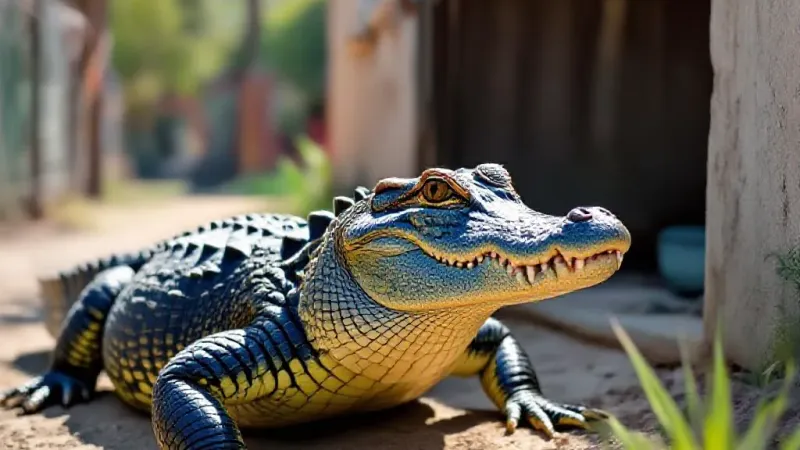
Federal authorities conducting a raid on a luxury downtown Los Angeles apartment last month discovered over 42 kilograms of fentanyl, an AR-15 rifle, a gold-plated pistol, and a small alligator, the Justice Department announced. The September 10 raid at the Olympic + Hill building, where one-bedroom units reportedly rent for over $3,000 a month, led to the arrest of two individuals believed to be occupying the residence.
Marvin Angelito, 27, and Susan Gonzalez, 26, were taken into custody and charged with possession with intent to distribute fentanyl. Magistrate Judge Karen L. Stevenson ordered Angelito to be detained, while Gonzalez was released on a $15,000 bond. Both have yet to enter pleas in response to the charges, which could carry a sentence of up to life in prison if they are convicted. Attorneys for Angelito and Gonzalez either declined to comment or did not immediately respond to requests for comment.
The raid followed an extensive investigation by federal agents targeting an L.A.-based fentanyl trafficking organization. According to a criminal complaint, federal agents were initially tipped off to the luxury building during surveillance and controlled-buy operations. Over the summer, an FBI confidential source arranged to purchase 500,000 "M30" fentanyl pills for $125,000 from an alleged trafficker identified as Anthony Rea. After Rea agreed to a video call to display the drugs, federal agents tracked him and an associate to the apartment building on Olympic Boulevard.
During the video call, Rea’s associate described the apartment as a "stash house," stating the place was "official" and "cartel s— over here," according to an affidavit from FBI special agent Brent James. The next day, the confidential source met with Rea to complete the drug exchange.
Following this August transaction, Special Agent James traced Marvin Angelito to Unit 4513 and determined that he and Susan Gonzalez were likely the apartment's sole occupants. Around 5:30 a.m. on September 10, Agent James and his team raided the unit, finding Angelito and Gonzalez asleep in the bedroom.
During the initial search, authorities deployed a K-9 unit to locate any hidden compartments. The search took a dangerous turn when the dog became disoriented and began to collapse, suspected to be from fentanyl exposure. The K-9 handler quickly administered Narcan to revive the animal.
Ultimately, federal agents seized approximately 42.6 kilograms—just under 94 pounds—of fentanyl pills and powder. The search also turned up about a kilogram of heroin in a kitchen cabinet, 7.2 kilograms of cocaine, and various laboratory equipment, including beakers, mixers, stirrers, and torches, along with a hydraulic press. Weapons seized included an AR-15 rifle with ammunition found in a hallway closet and a gold-plated Desert Eagle .50-caliber pistol with ammunition located on the kitchen counter. A police radio was also recovered.
Amidst the arsenal and narcotics, the small alligator was an unexpected discovery. U.S. Fish and Wildlife Service agents were called in to take possession of the reptile. This incident highlights the ongoing efforts by federal agencies to combat drug trafficking in Southern California, even when operations take an unusual turn.