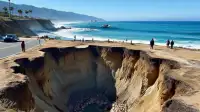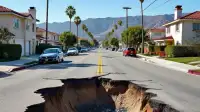
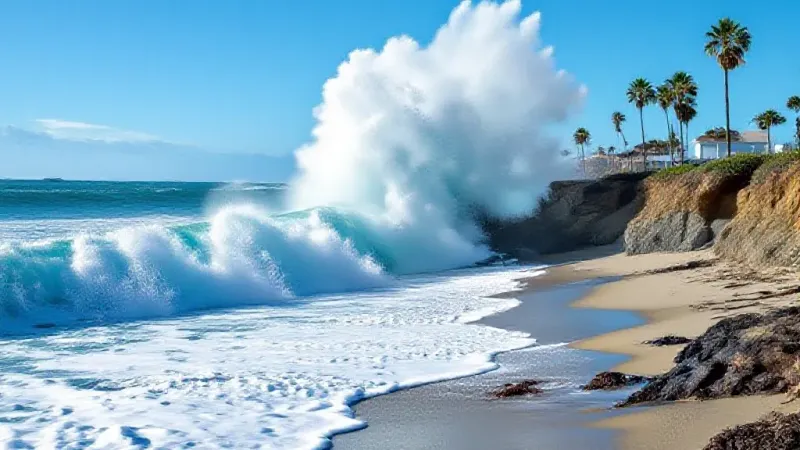
Recent intense waves and coastal flooding, which have seen parts of the Southern California coastline crumble, have brought renewed attention to the nuclear waste stored at the shuttered San Onofre nuclear power plant near San Clemente.
Oceanographer Kim McCoy, a former wave dynamics researcher and a long-time advocate against beach storage of nuclear waste, observed that rising sea levels, storm waves, and El Niño could compromise a section of the walkway protecting the seawall. The waste canisters, he noted, are situated just 100 feet from that vulnerable area.
Southern California Edison (Edison), the plant’s owner, has committed to the California Coastal Commission that it will relocate the waste to a higher elevation on site if modeling indicates that sea level rise and erosion will become a significant concern. Manuel Camargo, principal manager of decommissioning for Edison, described the system as "extremely robust." He noted that based on state data from the California Ocean Protection Council, the seawall is not expected to be inundated before 2050. Camargo also added that the system is designed to withstand a maximum credible tsunami without it overtaking the seawall, and a 7.0 magnitude earthquake would produce only about half the force the system is built to endure.
Most experts, including James Day, a geology professor at UC San Diego, agree that the immediate risk of erosion damaging the nuclear waste storage system is extremely low. However, Day stressed the necessity of thinking long-term, pointing out that the waste remains hazardous for potentially thousands of generations. He also noted that the plant sits on relatively young rocks in a seismically active area, making it an unsuitable location for long-term nuclear waste storage. Other concerns raised included the potential for beach slope collapses to increase tsunami vulnerability and the corrosive effects of ocean air on the steel waste canisters. Greg Jaczko, former head of the Nuclear Regulatory Commission, suggested Edison could enhance its monitoring efforts, though the utility currently tracks air temperature, radioactivity, external canister cracks, and inspects test canisters.
San Onofre's iconic twin domes, visible from I-5 on Marine Corps Base Camp Pendleton, still stand, but behind the security checkpoint, the site is largely a demolition zone. Since its shutdown in 2013 due to faulty steam generators, most of the plant's buildings have been razed and hauled away. The twin domes, which once housed the reactor cores, are scheduled for demolition early next year. However, the 3.6 million pounds of high-level waste will remain indefinitely. This waste consists of spent nuclear fuel stored in rows of underground concrete vaults, each holding a steel canister.
Despite Edison's confidence in its current safety measures, the utility also desires to move the waste as soon as possible, in part due to the high cost of the current storage arrangement. From 1982 to 2014, Edison customers, like ratepayers nationwide, contributed to a federal fund for a permanent nuclear waste storage solution. But federal plans for a deep geological repository at Yucca Mountain in Nevada stalled in 2011. Now, utilities across the U.S. sue the federal government annually to recover storage expenses, a cost Camargo states amounts to taxpayers paying $2 million a day. Camargo remarked that the waste is "so safe that it’s almost a problem" because its perceived security reduces the urgency to find a permanent solution.
The Trump administration's Department of Energy is pursuing a new approach: creating "campuses" in various states to store waste. In exchange, local jurisdictions would receive funding to develop different aspects of the nuclear cycle, such as fuel creation, power generation, and recycling. This initiative aims to address the waste currently stored at 80 reactor sites across the country and provide locations for waste from new reactors the administration intends to build. California, along with several other states, currently has a ban on new nuclear power until a permanent federal storage site is established, though some state leaders are exploring exceptions for small modular reactors.
The Energy Department announced in July that it had signed agreements with Utah, Tennessee, Oklahoma, Idaho, and Indiana to explore their potential as campus hosts. Congressman Scott Peters and Mike Levin, whose district includes San Onofre, support this concept. Edison, for its part, is in discussions with Utah and Tennessee to assist in this effort. Supporters of the campus idea, like Tim Kowalchik, research director at Utah’s Office of Energy Development, highlight principles of "consent-based siting" and the offer of jobs and funding as key to securing community buy-in. However, opposition remains, with Carmen Valdez, radioactive program manager for the nonprofit Heal Utah, noting that community engagement and transparency about these plans are still limited. She reiterated that Utah communities have historically rejected becoming a waste site. Meanwhile, Finland is currently the most advanced nation in developing a deep, permanent geological storage facility for nuclear fuel.