
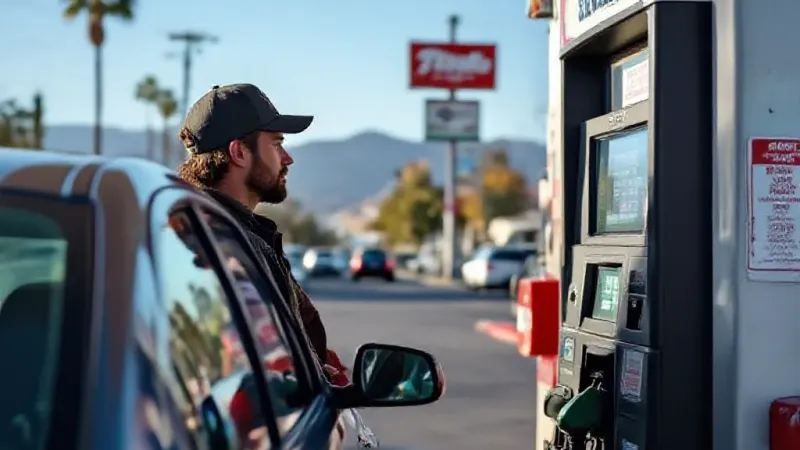
The average price for a gallon of self-serve regular gasoline in Riverside County has now risen for 26 consecutive days, reaching $5.919 on Sunday. This marks the highest price local drivers have faced since May 30, and it reflects a broader trend hitting Southern California's pocketbooks.
Over the past 26 days, the average price across Riverside County has climbed a substantial 39.9 cents. Just on Saturday, prices jumped 5.3 cents. Looking further back, the current average is 14.7 cents more than a week ago, and 38.2 cents higher than one month ago. For those tracking the year-over-year changes, gasoline is now $1.361 more expensive than it was at this time last year.
This sustained increase isn't just a local phenomenon, but it's impacting local residents directly. The Automobile Club of Southern California attributes the higher prices to international factors. Doug Shupe, the media and public relations manager for the Automobile Club of Southern California, stated on Thursday that oil prices are near or over $100 a barrel. He attributed this to "continued supply concerns related to the Middle East conflict," which has driven up pump prices both locally and nationally.
In fact, prices have seen a significant acceleration since February 28, following the start of the joint U.S./Israel war on Iran, according to AAA and Oil Price Information Service figures. Since that date, Riverside County's average price has surged by $1.368, reflecting the direct impact of global events on the local commute.
Nationally, the trend is similar, though typically not as acute as in California. The national average price also rose for the 13th time in 14 days, settling at $4.313 with a three-tenths of a cent increase. Compared to a week ago, the national average is up 16.6 cents, and 24.2 cents higher than a month ago. Over the past year, national prices have risen $1.134, with a $1.331 increase since the conflict in Iran began.
What makes this current rise particularly noteworthy, both locally and nationally, is its timing. According to the American Automobile Association (AAA), this national increase is occurring "during a season when gas prices typically go down" due to lower gasoline demand. This inversion of seasonal norms adds an unexpected layer to the current economic pressure at the pump. Patrick De Haan, head of petroleum analysis at GasBuddy, further highlighted this unusual situation, stating that the national average price is currently at its highest amount this late in the calendar year.
For Southern California drivers, this means enduring higher costs for their daily drives, whether it's the commute down the 405 or a weekend trip to the beach. The confluence of international conflict and an atypical seasonal price hike points to a challenging outlook for fuel expenses in the coming weeks.