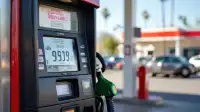

Drivers in Los Angeles County watched average gas prices climb to $6.06 on Tuesday, marking the 28th consecutive day of increases and the highest point since June 1. The average price rose 1.6 cents that day, according to figures compiled by AAA and Oil Price Information Service.
Orange County saw a similar trend, with its average price rising 2.5 cents on Tuesday to $6.037. This also marked the 28th straight day of increases for the county, reaching its highest average since May 28.
Over the past 28 days, the average price in Los Angeles County has jumped 41.8 cents. For Orange County, the increase over the same period was 46.2 cents. Looking back further, LA County residents are paying 14.8 cents more than a week ago and 41.4 cents more than a month ago, with Orange County seeing similar increases of 14.6 cents and 45.5 cents, respectively. Compared to a year ago, both counties are paying significantly more, with Los Angeles County prices up $1.347 and Orange County prices up $1.331.
A substantial portion of these increases has occurred since late February. According to the data, the average price in Los Angeles County has risen $1.366 since February 28, the date marked as the start of the joint U.S./Israel war on Iran. Orange County has seen an even larger increase of $1.401 since that time, which analysts say sent oil prices higher and drastically accelerated increases at the pump.
Nationally, the average price for self-serve regular gasoline also saw an uptick, rising 1.2 cents on Tuesday to $4.328. This marked the 15th increase in 16 days, with the national average up 25.1 cents over that period. It stands 17.7 cents higher than a week ago and 25.8 cents more than a month ago. The national average has also increased by $1.346 since the attack on Iran, and Patrick De Haan, head of petroleum analysis at GasBuddy, noted it is at its highest amount this late in the calendar year.
The consistent climb in prices across the country, including here in Southern California, is attributed to a confluence of global events. Patrick De Haan, head of petroleum analysis at GasBuddy, explained in a statement released Monday that “geopolitical tensions escalated on multiple fronts,” impacting prices. He specifically cited “friction between the U.S. and Iran, new hostilities in the Red Sea and the shutdown of Saudi Arabia’s East-West pipeline” as factors combining to significantly raise prices.
Further compounding the issue, De Haan pointed to recent attacks that “knocked two additional Russian refineries offline, further straining global refined product supplies.” He noted that while much of the country typically transitions to cheaper winter-blend gasoline around this time, the ongoing global escalations are likely to offset any expected seasonal relief. For Southern California drivers, the message is clear: De Haan advised “motorists should brace for continued volatility ahead,” indicating that “meaningful price relief [is] unlikely in the near term.”