
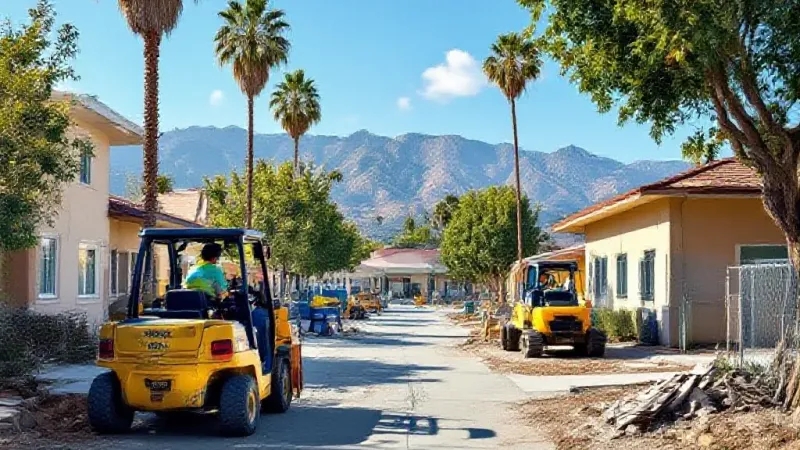
The Los Angeles Unified School District is currently navigating a significant paradox: committing hundreds of millions to modernizing and rebuilding school campuses while simultaneously facing a steep decline in student enrollment and a projected budget crisis that could necessitate school closures and staff layoffs.
Enrollment in LAUSD schools has taken another notable dive this year, decreasing by about 4%. This follows a trend of steady declines since 2003, with the district losing approximately 2.3% of its K-12 students annually, seeing steeper drops in recent years. This year's 4.3% decline through the fifth week of school was higher than the anticipated 3.4%.
This shrinking student population contributes to a looming budget deficit, which could swell to $3.5 billion by June 30, 2029. In response, district leaders are planning budget cuts that likely include layoffs, unpaid staff furloughs, and the closure of some schools. Chief Financial Officer Saman Bravo-Karimi estimated this steeper-than-expected enrollment drop added a $60 million hurdle to this year's budget problems, projecting the district could remain solvent for about two more years after the current academic year, even with planned job cuts exceeding 6,000 positions.
Adding to the complexities, the Board of Education recently pulled a proposed contract to hire a consultant for school closure guidance, following alarm from parent and employee groups. Instead, Supt. Andrés Chait announced a districtwide "community conversation" aimed at strengthening schools, emphasizing that the goal is "not simply to have fewer schools," but stronger ones. The district currently does not have a plan detailing which campuses might close.
Despite these discussions, the district is pressing ahead with its ongoing modernization and rebuilding program, backed by $9 billion in voter-approved bonds from November 2024. This week alone, the board approved $322.6 million for major reconstruction projects at four elementary schools in South Los Angeles: Menlo Avenue, 93rd Street, 96th Street, and 122nd Street. These projects, initially driven by earthquake risks, have expanded in scope. In June, an additional $496.9 million was approved for seismic safety reconstructions at Normandie Avenue Elementary and 107th Street Elementary, both in South L.A., and Narbonne High School in the Harbor area. The total anticipated cost for these seismic safety projects is expected to exceed $2 billion.
This dual approach — planning for closures while investing heavily in new facilities — has raised questions among board members. Nick Melvoin inquired about the district’s eligibility for state seismic construction funding if projects proceeded without state approval and the flexibility to adjust or cancel projects based on funding or closure decisions. Chief Facilities Executive Krisztina Tokes indicated no such assurances for state funding, noting that funds are underfunded and oversubscribed, and while projects could return to the board, money is spent once approved. Rocio Rivas questioned if these were the right projects, to which Tokes responded that the four elementary schools approved this week have enrollments ranging from 500 to over 700, exceeding average elementary school sizes, and that programmatic needs are considered.
District officials justify proceeding with construction, citing the immediate benefit to students and the need to address risks posed by older "lift-slab" construction styles from the 1950s-1970s. They also noted that current reconstruction efforts are actually reducing student capacity at these schools, allowing for more open space and recreation areas. Board member Tanya Ortiz Franklin, who initially expressed similar concerns about rebuilding while downsizing, stated confidence that the district is finding "the right balance between high-priority safety upgrades, ongoing community engagement and long-term rightsizing."
However, community activist Maria Luisa Palma expressed concern that the district has not published reports detailing enrollment assumptions or planned consolidations for its bond spending, making it difficult for taxpayers to evaluate the prudent use of these funds. Meanwhile, examples of ultra-small elementary schools, some with fewer than 100 students, highlight the district's excess capacity.
As the district plans for over 6,000 job cuts in a system that employed 83,000 last year, it continues to grapple with the complex task of providing up-to-date learning environments while managing a rapidly shrinking footprint across Southern California.