
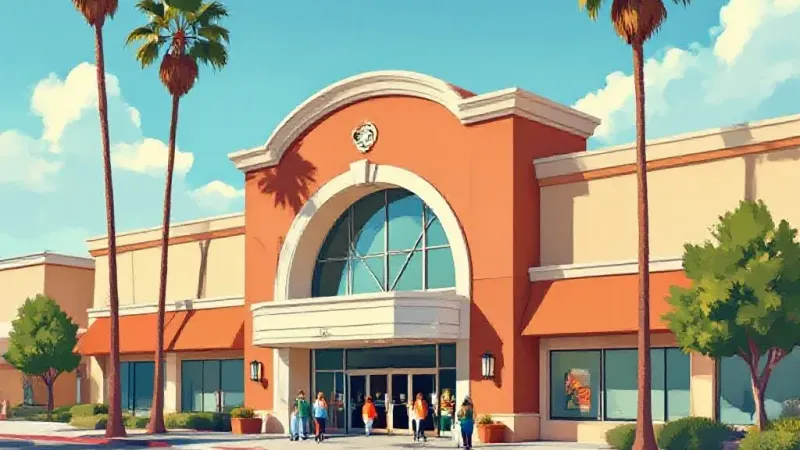
Today, October 21, marks "Back to the Future Day" for fans, a nod to the future date when Marty McFly and Doc Brown traveled forward in time in the 1989 sequel. Here in Southern California, however, a landmark from the original 1985 film is grappling with its own potential leap into a very different future. The Puente Hills Mall in the City of Industry, instantly recognizable to fans as the exterior of the fictional Twin Pines Mall, is the subject of a proposal that would convert much of the largely vacant retail center into an industrial complex.
The Puente Hills shopping center, which originally opened in the 1970s, has seen a steady decline in retail activity over the years. Despite still hosting an AMC movie theater and the entertainment venue Round1, it's now largely empty. Yet, its enduring appeal to *Back to the Future* enthusiasts ensures a steady, if sparse, stream of visitors keen to see where Doc Brown first demonstrated his DeLorean time machine.
In 2024, an ownership group linked to RCB Equities and Real Estate Development Associates, known as REDA, acquired the property for a reported $115 million. Their project description outlines two distinct options for redeveloping the site. The first option proposes an industrial development featuring two warehouses, with the flexibility for one of these buildings to house a 10-megawatt data center. The second option blends industrial and commercial uses, offering either a warehouse alone or a warehouse and data center, alongside multiple new commercial buildings. Both proposals include plans for a new bus transit station, surface parking, and landscaping. It's important to note that this data center component remains solely a proposal and has not yet received approval or begun construction.
This proposed transformation has not gone unnoticed by local residents. Communities neighboring the City of Industry, including Rowland Heights, have joined a wider regional campaign to oppose the development. This resistance is spearheaded by the No Data Centers San Gabriel Valley coalition, which raises several concerns about the project's potential impact.
Opponents suggest the industrial complex could significantly increase local demand for electricity and water. They also worry about continuous equipment noise, increased air pollution from construction activities and traffic, and emissions from diesel-powered backup generators typically associated with data centers. Furthermore, some residents have voiced concerns that the substantial infrastructure costs required for such a development could eventually be passed on to local electricity and water customers. Falynn Love, a resident, shared her concern with a local news outlet, stating that surrounding communities would be "bearing the cost of these kinds of projects." She has advocated for the property to be preserved or redeveloped as a community space instead of becoming an industrial complex.
Adding to residents' frustrations is the unique composition of the City of Industry itself. The city is predominantly zoned for commercial and industrial use, with the city stating that 92 percent of its developed land is industrial and 8 percent commercial. This leaves a very small residential population within the city limits. Consequently, many people who would be directly affected by these large-scale development decisions live outside the city and therefore lack the ability to vote in City Council elections, limiting their direct political influence.
This specific dispute at the Puente Hills Mall is part of a larger ongoing regional battle over data center development across the entire San Gabriel Valley. Past community pressure has successfully led to temporary restrictions on such developments in several other cities, including El Monte, Montebello, and Baldwin Park. In Monterey Park, significant opposition arose against a proposed 218,400-square-foot data center on Saturn Street. That developer ultimately withdrew their application, and voters later approved a ballot measure in 2026. This measure prohibits data centers citywide, explicitly aimed at protecting "air quality, drinking water resources and public health; prevent impacts to electricity and water rates." The future of the Puente Hills Mall, a site beloved by movie fans and a significant piece of Southern California's commercial landscape, now hinges on this ongoing local debate.